The Strategic Advantage of Integrated Apparel Manufacturing: Choosing the Right Partner in a Dynamic Landscape
In recent years, Southeast Asia has solidified its position as a powerhouse, with Vietnam apparel manufacturing emerging as a clear leader. The resilience of this sector has been remarkable, particularly in its pivot towards more integrated solutions like Vertical Manufacturing and Full Package Manufacturing. By evolving into a Trusted Partner that offers Premium Vertical Manufacturing, Springtex helps brands move beyond simple cut-and-sew relationships, recognizing that sustainable growth requires a manufacturing partner that can offer comprehensive, end-to-end solutions.
Beyond Cut-and-Sew: Understanding the Scope of Vertically Integrated Manufacturing
To appreciate this evolution, it is critical to define the core concepts of integrated production.
Vertical Manufacturing is a production model where a single company manages two or more consecutive stages of the supply chain. In the context of apparel, this can mean a manufacturer controlling the entire process from spinning the yarn and knitting or weaving the fabric to the final cutting and sewing of the garment. The central tenet is consolidation and control over the foundational elements of production.
This leads directly to the concept of Full Package Manufacturing (often referred to as FPP or FPM). In a Full Package agreement, the manufacturer does not just provide labor for cutting and sewing customer-owned materials. Instead, they manage the entire process on behalf of the brand. This includes:
l Fabric and Material Sourcing: Procuring the necessary textiles, trims, and accessories.
l Sample Development: Creating initial proto and size sets for brand approval.
l Production: The physical cutting, sewing, and assembly.
l Quality Control (QC): Implementing rigorous standards at multiple stages.
l Packaging and Logistics: Preparing final products and managing shipment to the brand's distribution centers.
When these models coalesce—when a vertically integrated operation offers a full-package service—the dynamic changes from transactional to highly collaborative.
The Strategic Benefits of a Vertical, Full Package Partner in Vietnam
For apparel brands, especially those aiming for the premium or performance segments, the advantages of this integrated approach are tangible. The key difference between general manufacturing and Premium Vertical Manufacturing lies in the depth of control, innovation, and strategic alignment.
The most significant benefit is enhanced control over quality and consistency. When a manufacturer produces its own fabric and manages the subsequent sewing, it eliminates many of the variables and friction points that plague traditional models. They can enforce rigorous internal quality standards from the raw material level up to the finished garment, rather than depending on external suppliers. This is critical for meeting the precise requirements of performance fabrics, intricate designs, and consistent sizing.
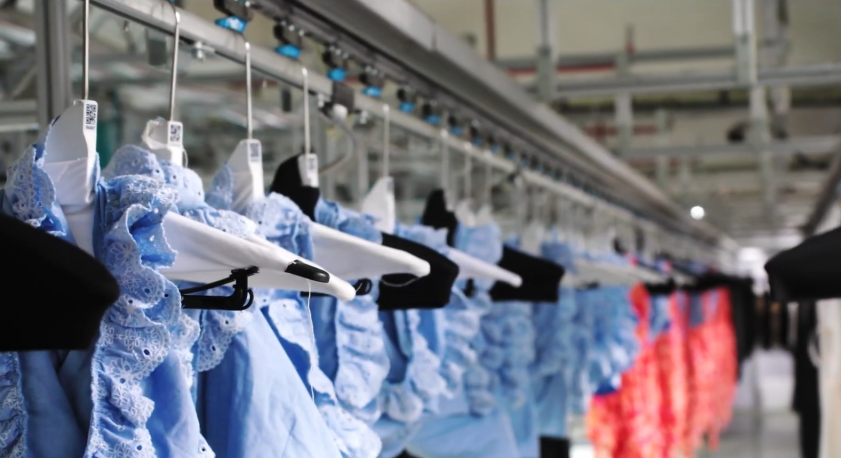
Apparel manufacturing in Vietnam
Furthermore, integration leads to improved speed to market and supply chain agility. The ability to coordinate fabric production directly with sewing schedules significantly reduces lead times. The proximity of fabric production to garment assembly within the same country, or even the same company, minimizes shipping delays and streamlines logistics. This agility is vital in an industry driven by rapid fashion cycles and volatile consumer demand.
Cost-efficiencies also emerge from reduced transactional friction. By consolidating multiple steps under one management structure, companies minimize internal overheads related to multi-step logistics, separate procurement processes, and complex supplier management. While a premium service might have a higher initial contract value, the total land cost and the significant reduction in costly QC issues and production delays often present a more favorable long-term financial picture.
The Foundation of Trust and Long-Term Partnership
Perhaps the most valuable, albeit intangible, aspect of selecting an integrated manufacturer is the development of a strategic alliance. Choosing a Trusted Partner involves a thorough evaluation of reliability, ethical standards, and a long-term commitment. It requires assessing a manufacturer's capacity not just to deliver on an immediate order, but to grow alongside the brand, offering scalability and innovation support.
Ultimately, the choice of a manufacturing partner is a choice of a business model. While cut-and-sew remains a viable option for certain needs, the long-term trend, especially in regions like Vietnam, is towards comprehensive, high-value, vertical solutions that offer quality, speed, and reliability. By specializing in Premium Vertical Manufacturing and Full Package Manufacturing, Springtex has established itself as a Trusted Partner in the world of Vietnam apparel manufacturing. For brands looking to leverage the power of Vertical Manufacturing, finding a collaborator that understands the nuances of global supply chains is the first step toward a successful collection.
References and Further Reading:
World Trade Organization (WTO): For data on global textile and apparel trade flows. [www.wto.org]
McKinsey & Company - 'The State of Fashion' Reports: These annual reports provide in-depth analysis of global sourcing shifts, supply chain resilience, and emerging markets like Vietnam. [www.mckinsey.com]
The Vietnam Textile and Apparel Association (VITAS): The official body for the industry in Vietnam, providing localized market insights, trade statistics, and government policy updates. [www.vietnamtextile.org.vn]
Fatal error: Allowed memory size of 134217728 bytes exhausted (tried to allocate 3973016 bytes) in /www/wwwroot/springtex.com/include/pdo.class.php on line 54