
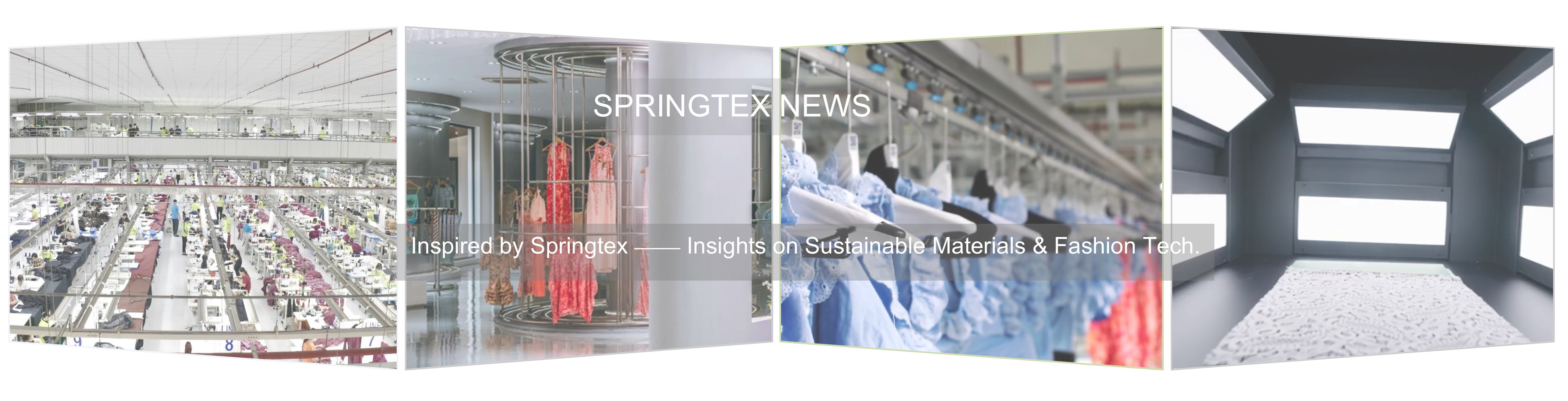
Inside Springtex: Transforming Ideas into High-Quality Garments
The journey from a creative spark in a designer’s studio to a physical garment hanging on a retail rack is a complex engineering feat. In an industry where precision, speed, and ethical transparency define market leaders, selecting the right production partner can make or break a label. As a leading global clothing manufacturer, Springtex has spent over two decades pioneering a tech-driven, vertically integrated approach to apparel manufacturing. By fusing cutting-edge software with traditional artisan craftsmanship, the company transforms raw creative concepts into market-ready, high-end commercial fashion collections.
THE SPRINGTEX WORKFLOW
[ 3D CAD & AI Design ] --> Cuts sampling cost 50%
[ Fabric/Print R&D ] --> Own facility, 98% capability
[ RFID Smart Factory ] --> Real-time garment tracking
Step 1: Design Optimization via 3D CAD and AI
The traditional prototyping cycle has long been a notorious bottleneck in fashion development, requiring multiple iterations of physical fit-samples that drain time, fabric, and capital. To solve this pain point, the design-to-production journey begins inside Springtex's advanced digital suite. Dedicated garment technicians process client sketches within 48 hours to offer structural optimization.
By utilizing fashion-native AI and high-fidelity 3D CAD rendering, designers can visualize how a specific silk or knitwear fabric drapes, stretches, and fits a virtual model with exact precision. This digital verification system reduces physical sample crafting costs by 50% and dramatically shortens lead times, providing an authentic "what you see is what you get" workflow.
Step 2: Advanced Sourcing and Printing Capabilities
A beautiful design requires a meticulous physical canvas. Fabric and hardware sourcing at the facility spans a global footprint, allowing the factory to successfully develop or replicate 98% of available textile blends and hardware configurations on the market.
Printing Technology | Best Suited For | Key Manufacturer Benefit |
Digital Fabric Printing | Low-MOQ designs, hyper-detailed graphics | Infinite color variety without heavy setup costs |
Screen Printing | High-volume production runs | Rich color vibrancy and cost-efficiency at scale |
Operating proprietary textile processing and printing facilities gives the company unique control over the initial stages of production. Whether a brand requires low-minimum-order digital prints or highly vibrant screen prints for a mass-market launch, the vertical infrastructure handles everything in-house to protect design exclusivity and eliminate material delays.
Step 3: Inside the RFID-Driven Smart Factory
Once a physical fit-sample passes approval, the collection moves to the main manufacturing floor. Unlike traditional garment factories that suffer from opaque production timelines, manufacturing facilities leverage proprietary tracking automation.
Every single piece of apparel is assigned a unique Radio-Frequency Identification (RFID) tracking tag on a smart hanger system. As the garment travels through cutting, sewing, panel assembly, and final finishing, its data is synced directly to an integrated Enterprise Resource Planning (ERP) platform. This offers complete real-time production visibility, allowing project managers to monitor the minute-by-minute progress of an entire line.
Step 4: Rigorous Quality Control and Inspection
In high-end apparel production, a brand’s reputation rests entirely on the consistency of its seams, hemlines, and structural integrity. A strict quality control framework utilizes a hybrid inspection process.
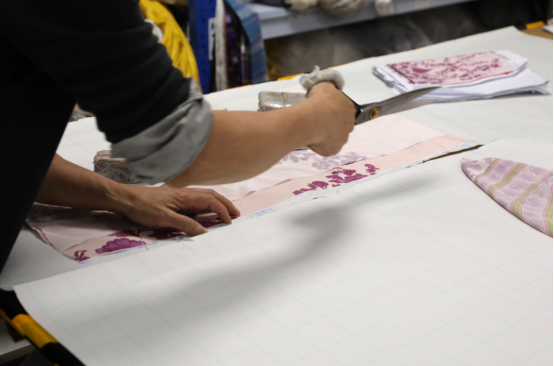
First, touch-screen technology at station checkpoints enables inspectors to instantaneously approve or flag specific garments for adjustments based on the collection's original tech pack. Second, after digital verification is complete, each item undergoes a meticulous, hands-on manual inspection by seasoned tailors. This double-layered safety net guarantees that loose threads, uneven alignments, or minor fabric blemishes are intercepted before packaging.
Step 5: Global Logistics and Transparent Partnerships
Modern brands require localized communication backed by global manufacturing muscle. To maintain a seamless experience, a dedicated technical manager is assigned to act as a single, consistent point of contact from initial consultation to final delivery.
A True Global Partnership: With dedicated creative showrooms located in New York, Los Angeles, and East Asian production offices, the brand bridges regional creative vision with global manufacturing power.
Clients can log into a personalized, branded client portal to view manufacturing metrics, tracking details, and real-time project updates. Furthermore, compliance certifications like WRAP and BSCI ensure that all garments are constructed under ethical, safe, and socially transparent working environments.
Elevating Your Brand Presence
Scaling a modern apparel brand demands an unyielding commitment to operational agility, textile innovation, and production accuracy. Partnering with a premier, vertically integrated clothing manufacturer protects your brand from supply chain vulnerabilities and unnecessary financial risks. By integrating 3D CAD visualization, smart RFID factory floors, and certified ethical labor standards, Springtex remains a trusted pioneer in modern apparel manufacturing—enabling designers worldwide to confidently scale their businesses and transform creative visions into premium realities.
Fatal error: Allowed memory size of 134217728 bytes exhausted (tried to allocate 3973016 bytes) in /www/wwwroot/springtex.com/include/pdo.class.php on line 54